Things That Can Lead to Bitterness
by Mary E. Stephens
Oct. 2026
BIT'TERNESS, n. from bitter. A bitter taste; or rather a quality in things which excites a biting disagreeable sensation in the tongue.
1. In a figurative sense, extreme enmity, grudge, hatred; or rather an excessive degree or implacableness of passions and emotions; as the bitterness of anger. Eph.4.
2. Sharpness; severity of temper.
3. Keenness of reproach; piquancy; biting sarcasm.
4. Keen sorrow; painful affliction; vexation; deep distress of mind.
Hannah was in bitterness of soul. 1 Sam.1. Job.7.
In the gall of bitterness, in a state of extreme impiety or enmity to God. Acts.8.
Root of bitterness, a dangerous error, or schism, tending to draw persons to apostasy. Heb.12.
Definitions from Webster's American Dictionary of the English Language, 1828.
Hebrews 12:11-16 Now no chastening for the present seemeth to be joyous, but grievous: nevertheless afterward it yieldeth the peaceable fruit of righteousness unto them which are exercised thereby. Wherefore lift up the hands which hang down, and the feeble knees; And make straight paths for your feet, lest that which is lame be turned out of the way; but let it rather be healed. Follow peace with all men, and holiness, without which no man shall see the Lord: Looking diligently lest any man fail of the grace of God; lest any root of bitterness springing up trouble you, and thereby many be defiled; Lest there be any fornicator, or profane person, as Esau, who for one morsel of meat sold his birthright.
Holiness and bitterness are incompatible according to Hebrew 12. And, bitterness is something that troubles and defiles more than just the one carrying it. It spreads itself all over the place when it is cultivated and watered and fertilized and encouraged to grow. It is the kudzu vine that covers and chokes and kills. Curiously, the first significant sin mentioned here after the defiling of bitterness is fornication. Individuals becoming profane are included next, with the example of Esau who sold his birthright as the father of the tribes of Israel and the bearer of the line of the Messiah for mere food. If you go back and read the story of Esau, bitterness is one of his prominent characteristics.
It is thought provoking that there are so many young people leaving the church today who are consumed with bitterness. While some of them have experienced horrendous things that ought never to have happened, and while those who transgressed against them should and ought to be punished for their wicked deeds and crimes, this does not excuse the sin of bitterness. Bitterness is not about what happened to you, it is about how you hold what happened and what you choose to do with it. Not surprisingly, too many of the young people and adults who are leaving the church in bitterness of spirit are turning to profane living and even to fornication. This is a tragic outcome, but as Hebrews tells us, not a surprising one.
Some Ways Bitterness Enters
There are things in this life that can and will lead us into bitterness if we let them. Here is a short list of things to think about in this regard. It is not a comprehensive list, but a small collection of things I have seen ruin people's lives. I have had to battle them in my own life upon occasion.
1. Refusing to forgive.
 While
this is commonly
acknowledged, forgiveness has been used as a club to beat so many people
into subjection to abuse it has gotten a bad name among some people.
Refusing to forgive is more in the line of hugging offences to you and not letting go. Nurturing the
resentment of an unforgiven injury - spiritual, emotional, mental, or
physical. It is not doing the work to heal, and not confronting the genuine
offenders where they need to be confronted.
While
this is commonly
acknowledged, forgiveness has been used as a club to beat so many people
into subjection to abuse it has gotten a bad name among some people.
Refusing to forgive is more in the line of hugging offences to you and not letting go. Nurturing the
resentment of an unforgiven injury - spiritual, emotional, mental, or
physical. It is not doing the work to heal, and not confronting the genuine
offenders where they need to be confronted.
For those who have misunderstood the limits of forgiveness, sometimes there is the assumption that to forgive automatically gives access - reconciliation - back to the offender, even power in some instances. This is also commonly taught in some spheres. The realization that forgiving and reconciling are not the same thing is, in fact, a liberating thing that gives the injured party space to forgive offences without giving reconciliation and access back to the offender. This distinction is important in some areas of life, especially where abuse and significant ungodliness are present.
Ephesians 4:31-32 Let all bitterness, and wrath, and anger, and clamour, and evil speaking, be put away from you, with all malice: And be ye kind one to another, tenderhearted, forgiving one another, even as God for Christ's sake hath forgiven you. [Note: Our example is God who forgives for Christ's sake. We aren't commanded to forgive because the pastor or dad or mom or the teacher said so.]
1 Corinthians 5:11 But now I have written unto you not to keep company, if any man that is called a brother be a fornicator, or covetous, or an idolater, or a railer, or a drunkard, or an extortioner; with such an one no not to eat. [Note: There are certain sins which REQUIRE us to refuse fellowship - even to the point of sharing a meal. Among these are fornication, covetousness, and railing. There are numerous pastors and others who Biblically should be put out of fellowship for their ungodly behavior.]
Here are some ways that we may be tempted for refusing to forgive.
-- Imagined offences. Things invented to
support a previous offence, or things invented simply out of pride.
-- Justifying resentment because of the
egregiousness of the offence. There is not justification for becoming
bitter simply because the offence was extreme. Feeding resentment and
justifying it leads to bitterness
which in turn is polluting. You hurt yourself more than the offender by
indulging in this.
-- Holding an offence on behalf of another
person, even when they have made peace with their offender. It's not
your duty to carry around someone else's injury. Taking up others' grudges or hurts leaves
you with no one to "make up with" because you weren't part of the
initial problem. Feeding this kind of grudge or unfogiveness leads to
bitterness.
2. Remaining in destructive relationships.
Where the offender doesn't admit to their wrongs or try to change,
you can't
be reconciled in that situation. Trying to continue there can easily
lead to bitterness. Reconciliation requires both parties to
agree upon the offence, and the solution. When someone refuses to do
their bit, you can't continue in fellowship with them in the same way
without putting yourself in a situation of perpetual hurt and offence.
Bitterness easily grows in this environment.
When your boundaries are not recognized and respected, reconciliation is not going to happen. You can't live at peace with someone who persistently disregards your boundaries. We are called to peace. Putting ourselves willfully into relationships where peace is unattainable again creates an environment where bitterness can thrive. Romans 12:18 If it be possible, as much as lieth in you, live peaceably with all men. We are not given an unqualified command to live peaceably with everyone. God knows there are some people who make this impossible. But holding onto bitterness puts us in the position of an offender, so we still need to put that down, even when we are compelled to walk away.
When anyone causes division and offence contrary to the doctrine of God, the Apostle Paul begs us to mark and avoid them. Romans 16:17-18 Now I beseech you, brethren, mark them which cause divisions and offences contrary to the doctrine which ye have learned; and avoid them. For they that are such serve not our Lord Jesus Christ, but their own belly; and by good words and fair speeches deceive the hearts of the simple. Those who deceive with good words and fairs speeches target the hearts of the simple, and let's be honest, there are many on the internet and social media. Our job is to mark and avoid them. When we don't, one of the potential outcomes of that is that we may be tempted to bitterness due to the destruction and deception that they spread. We can't stop them, but we can do our part to open the eyes of others -- mark, and protect ourselves from their evils -- avoid. It is amazing how many so-called Christians these days will defend and justify people who teach and do wicked things, who cause division among true believers, and who offend in various ways. Then we wonder why they eventually turn in bitterness and hatred against the very faith they once claimed. Well, no wonder. They embraced and defended destroyers, and they themselves were destroyed. Beware.
 3. Pursuing
relationships with professing Christians who have no respect for God or
His word.
3. Pursuing
relationships with professing Christians who have no respect for God or
His word.
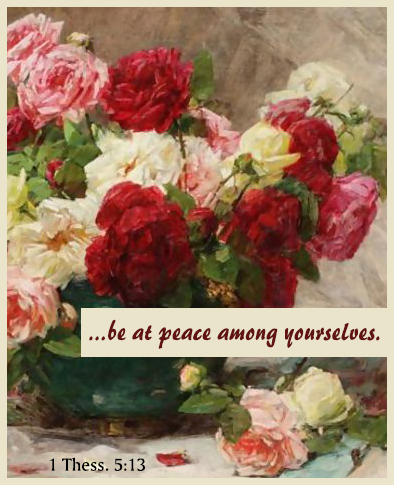
We are told to be at peace among ourselves (1 Thess. 5:13), to love one another (Rom. 13:8), to be kind one to another (Eph. 4:32), to bear one another's burdens (Gal. 6:2). However, we are also meant to have one mind in Christ (Php. 1:27). We are given clear guidelines for distancing ourselves from believers who are walking in disobedience (see above). When we don't follow those guidelines, we not only put ourselves in the way of temptation to participate in their sins, we also can be tempted to become bitter when we can't create the change in them that we desire to see. Sometimes it really is better to just walk away.
Furthermore, if they don't respect God's word and His right to their lives and allegiance, then they aren't going to be supportive, loyal friends and companions to you. Trying to persist in that relationship will only lead to repeated hurts and offences, which in turn opens the door for bitterness. (Refer back to 1. and 2.)
4. Keeping silent when you should speak.
Many people are intimidated into silence when some offender needs to be exposed. Whether it's a spouse, parent, pastor, teacher, spiritual leader, relative, and so forth; and whether it's sexual, physical, mental, or spiritual abuse. Allowing yourself to be intimidated into silence, to "keep secrets" lest you "destroy this ministry/home/person" is a fast track to bitterness. It may have nothing to do with not forgiving, because forgiveness is only one element of dealing biblically with such situations.
God speaking: These things hast thou done, and I kept silence; thou thoughtest that I was altogether such an one as thyself: but I will reprove thee, and set them in order before thine eyes. Now consider this, ye that forget God, lest I tear you in pieces, and there be none to deliver. Psalm 50:21-22
Living in the misery of chronic abuse without making an effort to free yourself or others is a sure way to cultivate bitterness. When you don't do your own part, it becomes easy to blame other people - family members, the church, Christianity at large, and even God. Part of this is likely unforgiveness and remaining in the bad place too long (see 1. and 2.) But, part of it is just the tension and pain of not addressing something that you should confront. No, it isn't going to be easy. It will be messy. This is why so many prefer to settle into bitterness and hate rather than stand up to the situation that has affected them or their loved one. God Himself may keep silence for a time, but in the end He reproves those who think they can get away with wickedness.
Psalm 39:1-3 I said, I will take heed to my ways, that I sin not with my tongue: I will keep my mouth with a bridle, while the wicked is before me. I was dumb with silence, I held my peace, even from good; and my sorrow was stirred. My heart was hot within me, while I was musing the fire burned: then spake I with my tongue,
David's heart burned within him when he held his peace before the wicked. God compelled him to speak up. It is for your betterment. It is for the victims - whether that's you or others. Trying to hold those offences silently will only burn you up, and this can then bring a state of resentment which leads to bitterness. When you don't say what you need to say it is easy to start blaming others and resenting them. Maybe it's you yourself who needs to do the work to help yourself and others.
5. Caring more for the things of this life than the things of heaven.
This one is quite off the previous topics, but it is another path that leads to bitterness through the door of resentment. Ultimately this one is the result of not believing that God knows what He is doing in your life. (Note: this is not about "forgiving God" for what He did to you. This impressions can be given by some. No, this is about accepting what He has seen fit to allow in your life, to trust Him completely and rest in the truth that He gives only that which is good for us or for others we are called to minister to.)
Resentment about what you didn't get or what you lost is one of the traps here. Whether it's things, education, wealth, health, position (in the church, work place, family, world, etc.), power, travel, a spouse, etc. it all comes back to covetousness, which is idolatry (Col. 3:5). These resentments and feelings of "I deserve better" are sure to grow strong roots of bitterness if you let them.
Obtaining much and losing much can also tempt us to bitterness. Christians who have obtained much in this life and then lost it are often tempted to resentment and then bitterness. When you experience great loss this is a time to be very cautious about the thoughts and feelings you entertain. Job 1:21-22 And said, Naked came I out of my mother's womb, and naked shall I return thither: the LORD gave, and the LORD hath taken away; blessed be the name of the LORD. In all this Job sinned not, nor charged God foolishly.
Specifically resenting what God has given others. This is both covetousness and envy. Greedy believers are going to have a rough path because the Lord will often keep them from the very things they lust after. When they refuse to acknowledge and repent of their envy, they are very prone to fall into bitterness.
Conclusion
This is not meant to be a complete list by any means, but a lot of the specific temptations to bitterness do fall under these general categories. The examples I have given are limited. You can doubtless think of more from you own experiences and observations. But the gist of this is that bitterness is too often the outcome from bad choices or attitudes on our part. When the heart is hardened, it actually grows bitter, and once the root has taken hold, it is very hard to get totally rid of it. One reason for that is that it spreads to others around us and we are not the only ones affected.
Micah 6:8 He hath shewed thee, O man, what is good; and what doth the LORD require of thee, but to do justly, and to love mercy, and to walk humbly with thy God?
Here's a simple truth you can rely upon throughout life. If we do justly, love mercy, and walk humbly with God we won't have a place in our lives and hearts for bitterness. You cannot embrace the pure, clean thoughts of Christ and follow in His steps and also walk in bitterness at the same time.
God's Thoughts and Mine
The Hammer
thoughts
That pound and shatter peace;
The Rodent thoughts
That gnaw and will not cease;
The Brier
thoughts
That pull and prick and scratch;
The Rover thoughts
That I can never catch;
The Serpent
thoughts
That leave their lairs at night;
The Shadow thoughts
That dim the new day's light;
These are my
thoughts;
Oh, take them, Lord, I pray,
Out of my heart,
And cast them far away;
And in their
stead
Give me those thoughts of Thine,
So crystal-clear,
So holy, high and fine,
That I shall
grow
By their pure grace enticed,
Worthy to think
The lovely thoughts of Christ.
Annie Johnson Flint
1 Peter 2:21-24 For even hereunto were ye called: because Christ also suffered for us, leaving us an example, that ye should follow his steps: Who did no sin, neither was guile found in his mouth: Who, when he was reviled, reviled not again; when he suffered, he threatened not; but committed himself to him that judgeth righteously: Who his own self bare our sins in his own body on the tree, that we, being dead to sins, should live unto righteousness: by whose stripes ye were healed.
Philippians 2:5 Let this mind be in you, which was also in Christ Jesus:



background and graphics by Mary Stephens
vintage graphic: unknown source and
Rawpixel.com